Indian Cuisine…a kaleidoscope of flavours
Indian food is renowned as one of the most vibrant and diverse cuisines on the planet, distinguished by its rich palette of flavours in each meal.
A legacy of migration, invasion and imperialism has created a cultural melting pot so vast, it has left an indelible mark on the nation’s food.There is one commonality across Indian Cuisine – its generous use of spice. Beyond this, however, the country’s cuisines vary greatly by region.
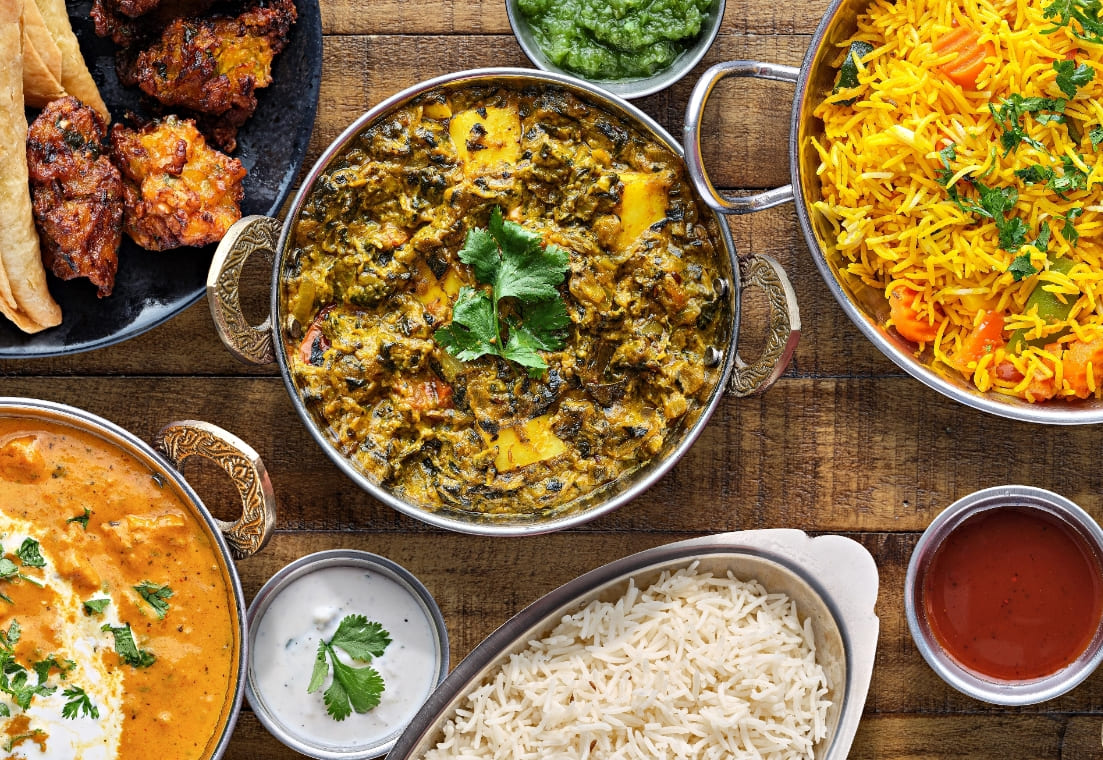
In the North, Kashmiri cuisines reflect strong Central Asian influences with rice playing a pivotal part in the everyday diet, while in Punjab, Haryana and Uttar Pradesh, chapati is the staple food. North Indian cuisine is generally characterised by its rich, creamy sauces, relying heavily on milk, paneer cheese, ghee (clarified butter) and yoghurt, which has earned Punjab the title ‘the land of milk and honey’. Popular dishes from this region include korma, butter chicken, chicken tikka, lamb rogan josh and samosas. North India is also home of the global favourite biryani. If you want to try food ‘fit for a king’ try out our quick and easy Biryani kits. Laila’s biryani kits offer a taste of royalty as they recreate the flavours of the Mughal Empire with traditional recipes from meaty and spicy Hydrabadi to the more floral Lucknowi style dish. LINK TO RANGE
Towards the West, desert cuisine includes an immense variety of dals and achars (pickles/preserves) – which most likely came about from the relative lack of fresh vegetables in these areas. Delicious Indian pickles and chutneys are prevalent in the arid climate of Rajasthan. Food here is among the most diverse and the West is home to some of India’s most famous dishes, including the UK curry house favourite Vindaloo – derived from the Portuguese carne de vinha d’alhos – a marinated pork dish. The dish originated in Goa, where strong Portuguese influences in the cooking style are evident. Coastal Goa, however, is probably best known for its coconut-infused fish curries.
Moving down, states like Maharashtra feature a mix of North and South cooking styles, with both rice and wheat enjoying a place at the table. Meanwhile, East India’s proximity to China means that there is a distinct Oriental influence on much of the food here and dumplings are firmly on the menu, together with more delicately spiced and subtle cuisine. This region is most famous for its syrupy desserts.
As you head towards the tropical South, the cuisine heats up and is characterised by the use of spices, seafood, fish and coconut, as most of the provinces enjoy coastal kitchens. Generous use of chillies and sour tamarind make this the place for those who like it hot! Among the fieriest cuisine in the country, the sauce is usually thinner and most dishes involve coconut and rice with Keralan Fish Curry one of the region’s most famous exports. An authentic Southern meal is almost always served on a banana leaf, especially in Kerala. Placing hot food onto these leaves is believed to enrich the food with extra nutrients.
Curry continues to be a mainstay of Indian cooking. The word Curry itself, which is now widely used to describe almost any food of South Asian origin, most likely originates from the Tamil word kari, meaning sauce. It was coined by the British during India’s occupation. Although, another theory is that it came from the French word ‘cuire’ which means ‘to cook’.
Indian is considered a relatively healthy cuisine, involving lots of stewing of broth-based lentils and pulses (dals), stir-fried and sautéed vegetables, grilled lean cuts of meat, tandoor-style, with its main source of carbohydrates from rice and Indian style breads like roti and chapati. Indian cuisine is also known for its enthusiastic use of herbs and spices with rich medicinal properties – which is not surprising given the fact the Ancient Indians were behind Ayurvedic and Siddha medicine, which both place an emphasis on diet to achieve well-being.
Laila…Uniting cultures through a shared passion for food!
A UK love affair that has stood the test of time
Indian cuisine has dominated the UK’s top favourite ethnic cuisines for decades, only recently fighting for top spot with Chinese food. The UK’s love affair with Indian-inspired dishes, from rich and creamy Chicken Tikka Masala and Butter Chicken to fiery Vindaloo, has been long-standing and there are an estimated 10,000 Indian restaurants in the UK which attract a phenomenal 2.5 million customers a week.
Britain’s first curry house opened in London (the Hindoostane Coffee House) two centuries ago, igniting a UK love affair with spice that has stood the test of time.
India welcomes millions of UK visitors each year and offers an incredible kaleidoscope of spicy flavours, but the UK’s love of Indian food is also deeply entwined with the colonial relationship, as returnees, keen to recreate dishes and condiments their families enjoyed on the sub-continent, fuelled the spicy food trend. Meanwhile, some historians suggest the West’s love of spice dates back even further, to the crusades.
Contact with other cultures has impacted on both India’s cuisine and its dining etiquette, but traditionally food is served at floor level or seated on very low stools/cushions and eaten with the right hand only.
Anyone who has ever had the opportunity to be a guest in a traditional Indian home will know that food and meal times are sacred, with the honoured guest always served first, followed by the oldest man, the rest of the men, children and finally women. The food presented at the Indian table is also for sharing and don’t be surprised if you need to lie down afterwards – it is considered rude for a host not to offer food to guests multiple times.